

Skip to content
AIMMASS— home
← All products

AICAN

Every can knows its whole story.

Live weight, identity and traceability in every sliver can.

Closes the chain · Card → speed frame

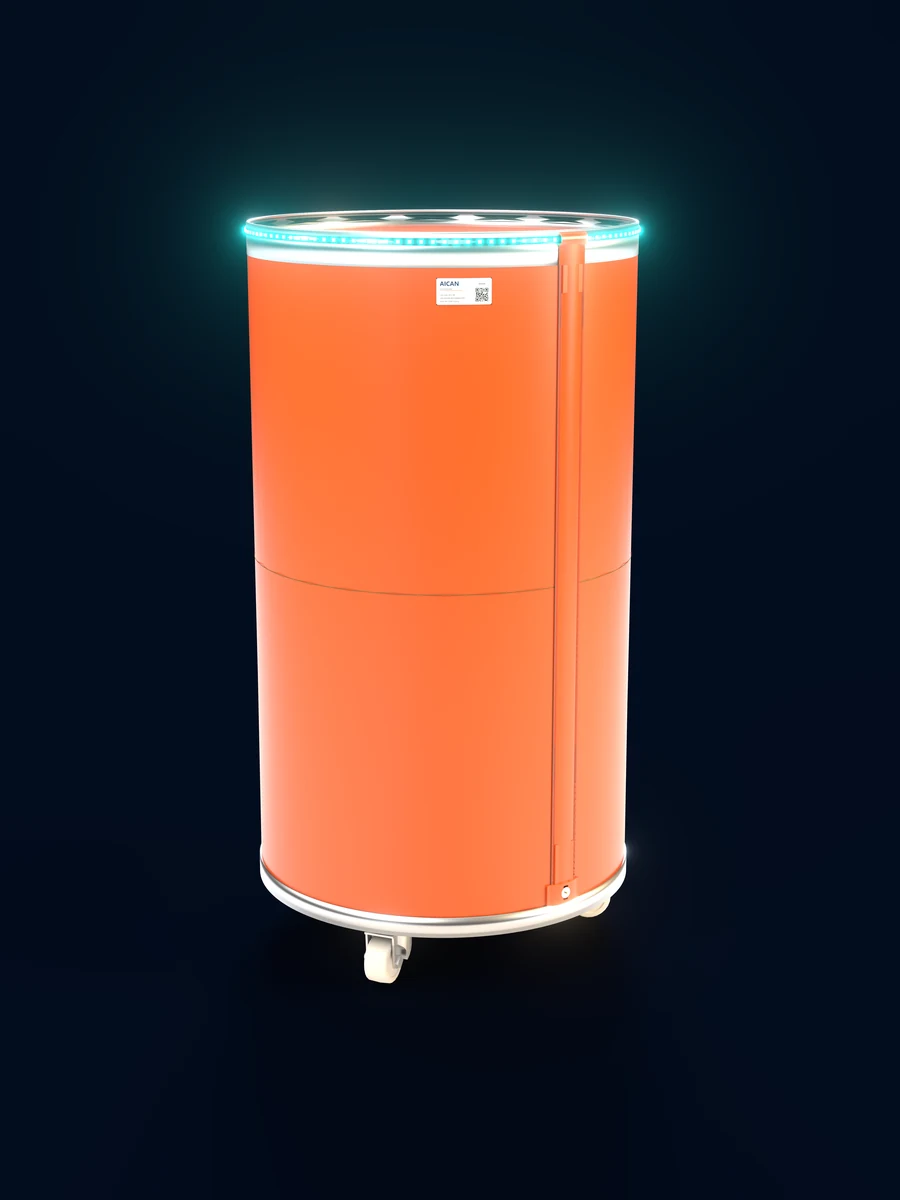
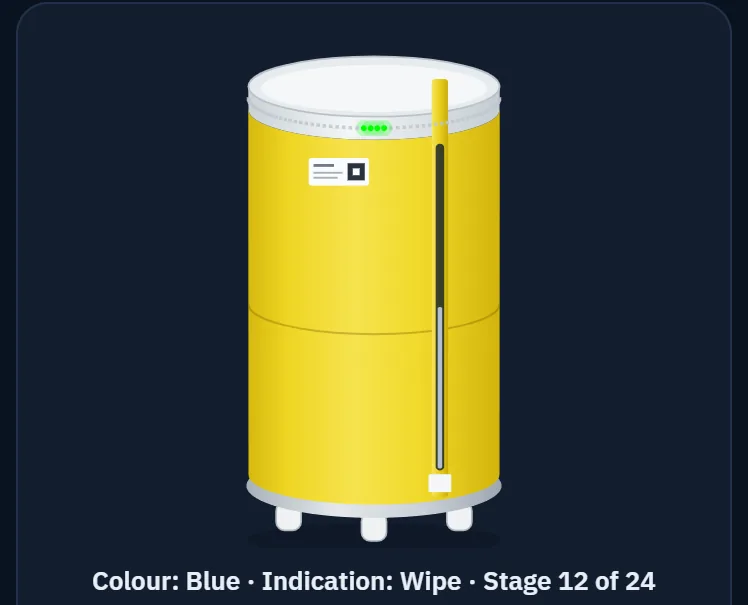
An AICAN sliver can: an orange can body on a wheeled base, its light band lit aqua around the rim, carrying an AICAN identity label.
Fits
Every standard can · Ø16 – 40 in · 32 – 50 in tall
Holds
Up to ≈53 kg of sliver · ≈30 kg in a 24 in can
24in body
609.6 × 1040 mm
Reads out
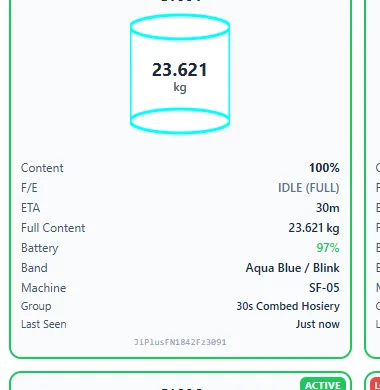
Kilograms, not a percentage
Moving parts
None
Charging
Dock, ordinary 230 V supply
Runs
On your own premises
Identity
60 combinations — 10 colours × 6 patterns

The problem on your floor

Sliver cans are walked, mixed, lost — and prove nothing to an auditor. Fifty million of them are in service worldwide and not one can tell you what is inside it.

The band

A can that can be read from the far end of the hall.

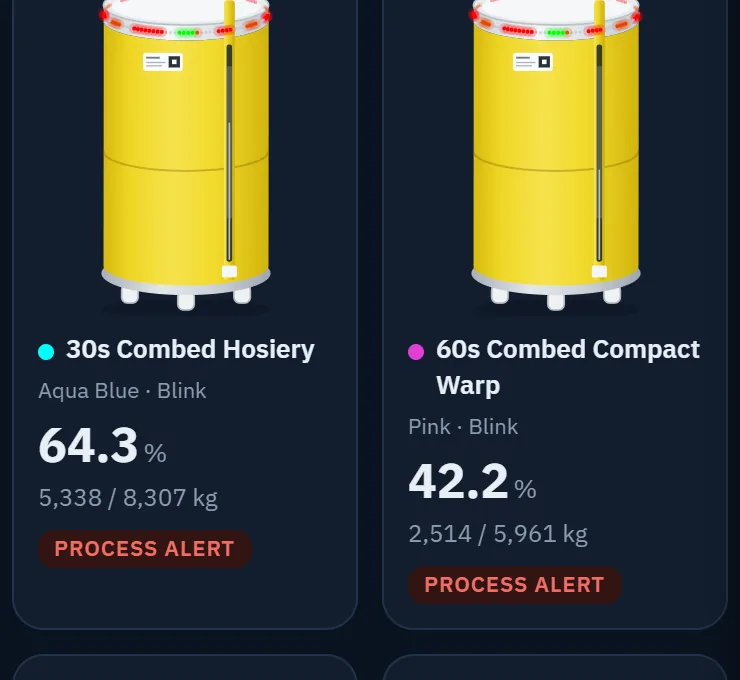
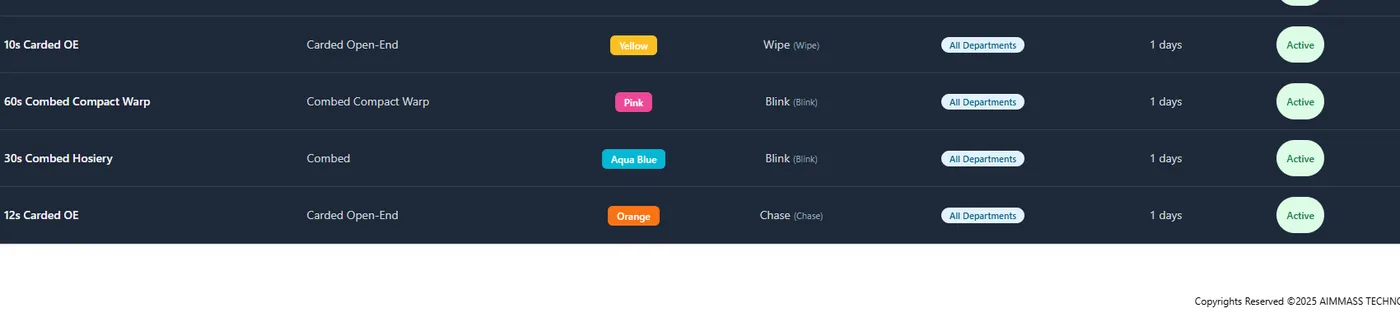
Ten colours, six patterns, sixty identities. One is set per count group and the whole floor learns it in a shift — no chalk, no tags, no walking up to read a label.

The same can, re-assigned from one count group to another. Nothing about the can changes except the band — no repaint, no new tag, no sticker to fall off in the humidity.

Try it yourself

Pick a colour and a pattern, or raise an alert, and watch the band on the can do exactly that.

AquaBlue · Wipe
Colour
Pattern
Alert

One colour and one pattern per count group — sixty in all, and a floor learns them in a shift.

Floor App

The same floor, from a phone.

Change a count group's band

Pick the colour and pattern, apply — every can in the group changes on the floor.

Report a quality issue

Scan the can, say what is wrong and how serious — it lands on that can's record.

Scan a can, see its story

Count group, machine, spindle, band — and every machine it has been through.

What needs doing now

A stopped machine first, then mix-ups, quality, machine and production, by count group.

What it does

Outcomes, not method

A drop-in retrofit: no new machinery, no production stop, and it runs on-premise without an internet connection.

  • 01Count drift caught while the can is still filling — not hours later at the wrap reelin field validation with our launch customers
  • 02Starvation detected before the stop, with a time-to-starvation countdown
  • 03Stops attributed as machine fault or recoverable starvation, with lost kilograms
18
report types, exportable as audit-grade records
120
speed-frame positions mapped to the can feeding them
up to 500
open-end rotors mapped the same way
under a minute
defect-to-source traceability

Everything it does

From the running system. Hover a tile for the line; open it for the screen.

It speaks, it measures, it knows its place.

AlsoSensed over the full heightAlerts on the can itselfWorks with the network downIdentity fused in siliconFind a canDock charging, 230 VStandard body, drop-in

Two faults the floor cannot see

Caught at the can, the moment they happen.

An off-hank can and a stopped delivery leave no trace on the floor. The sliver looks the same, the machine looks the same — and both used to surface a shift later, in the lab or in a downtime figure nobody trusted.

01Count deviation

A can that is off-hank does not stay a preparatory problem.

Three of the four spinning routes creel sliver straight from the can. Nothing stands between the deviation and the finished cone.

Open-end rotor · Ne 4–30
One step from can to cone, at rotor speed.
Vortex · Ne 20–60
The deviation passes straight into the package.
Air-jet · Ne 30–80
Blends, where the count tolerance is contractual.
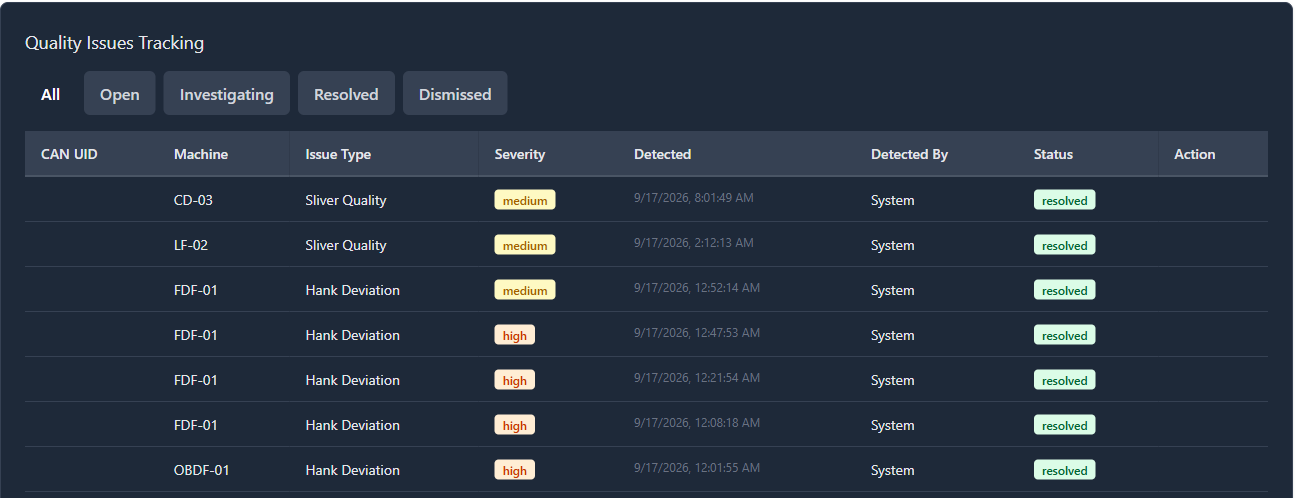
The quality issues table: hank deviations listed by machine, with severity, time detected and status.
Every deviation, named to the can and the machine that filled it.

What AICAN does about it

AICAN judges the can while it is still filling — before it is creeled, before it is drafted, and long before a clearer finds it at the winder.

in field validation with our launch customers

Follow one can to four hundred cops
02Machine stops

The stop that has not happened yet — and the one that has.

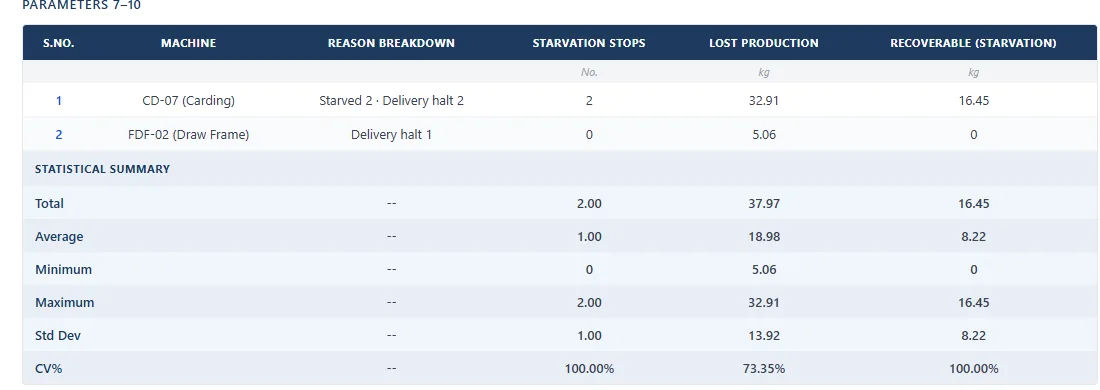
A preparatory machine has two can-facing ends, and they starve in opposite directions: fillers for empties at the delivery, consumers for full cans at the creel. Stage a can and the stop never happens.

Before the stop
A countdown to starvation per machine, minutes ahead, with the creel position that needs a full can.
When it happens
Every stop attributed: a genuine machine fault, or recoverable starvation with the kilograms it cost.
Honest downtime
A true stop is told apart from a can that was simply removed — so downtime, MTBF and OEE stop lying.
The machine stops report: reason breakdown, starvation stops, lost production and recoverable kilograms per machine.
Stops by cause, with the kilograms each one cost.

What AICAN does about it

One is a maintenance problem and one is a logistics problem — and they stop being averaged together in your OEE.

In the application

What AICAN looks like on the floor.

Six screens from the running system: the floor, the colours that tell its cans apart, every can by number, the deviations, and the people and robots moving cans.

From the running system. Customer and third-party names removed. Click a screen to open it at full size.

01/06Live layout

The whole preparatory floor on one screen: every can in its bay or creel, and every machine saying whether it is starving, off-hank or mid batch change.

In your hand

The floor goes where your people go.

The Management App runs on any phone, and opens out to the full width of a foldable. The Floor App is made for the tablet a supervisor carries down the aisle, in landscape or portrait.

Two apps, one floor, the same live numbers as the desk. Click a screen to open it at full size.

Management App

Any phone · foldable, opened out

01/06Pulse

What changed since you last looked, the biggest loss this shift, and what is waiting for your decision.

For directors and department heads, wherever they are.

Floor App

Tablet · on the mill network

01/05Floor live

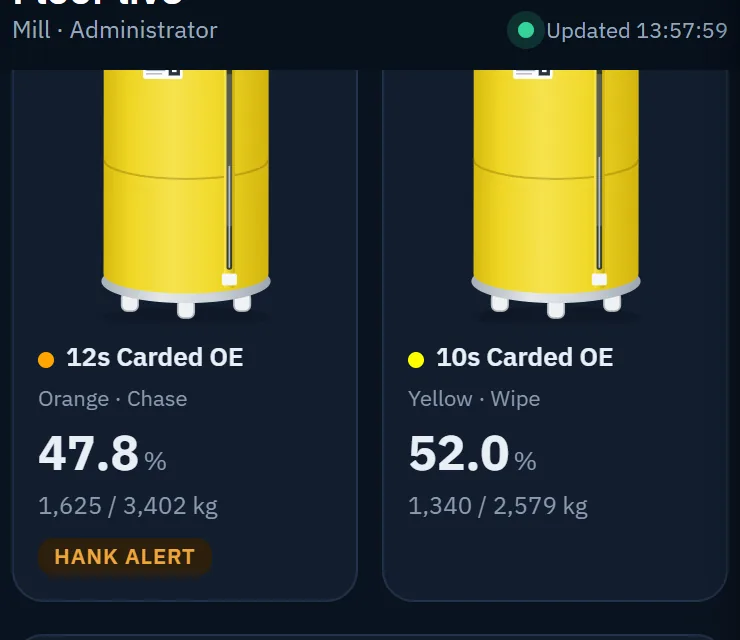
Floor health at a glance: active cans, in transit, full and waiting, mix-ups and alerts.

For supervisors and operators, on the floor itself.

Automation

Manual today. Robot-ready when you are.

The platform tells a robot which cans to collect, in what order, and which creel positions to fill — and confirms the load from the cans themselves. Arm, cart and humanoid classes all take the same task instruction.

integration-ready; we work with fleet vendors

Manual
People move cans — guided by the band and the floor app.
Hybrid
Robots carry, people tend the machines.
Automatic
Robots take the same task from the same platform.

MANTRAManufacturing Analytics and Narrative-driven Transformative Reporting AI

Ask the floor a question in plain words. The answer comes from your own numbers.

The first chatbot for the preparatory floor.

rolling out to our launch customers

  • Which machine starved most this shift. Which cans are not allocated. Where a can is now.
  • A quick question under every alert: ask MANTRA about this.
  • Role-aware: an operator, a supervisor and a director each get the answer their role is entitled to.
  • On the web, in the Floor app and in the Command app, the same assistant.

Management App

  1. 01Production today by count group
  2. 02Quality score by count group
  3. 03Stock by count group
  4. 04Department-wise production
  5. 05Downtime today

Floor App

  1. 01Stock by count group
  2. 02Production by count group
  3. 03Empty cans
  4. 04How many cans are full?

Why it is different

The machine OEMs automate the machine. Nobody instruments what moves between the machines — which is where the mill's quality, its waste and its audit trail actually live.

How it connects

AICAN publishes to AIMMASS Floor, over the same open bus as everything else.

AICAN gives the can an identity at the coiler, and hands it to AIBOA at the speed frame creel.

Come and see it on a floor.

Book a floor visit